Es mostren els missatges amb l'etiqueta de comentaris ordenadores. Mostrar tots els missatges

dimecres, 9 de setembre del 2015

IBM 305 'RAMAC'

First commercial computer with a moving-head hard disk drive (1956)
IBM 305 'RAMAC'
First commercial computer with a moving-head hard disk drive (1956)

dimarts, 1 de setembre del 2015

Emidec 1100

At Barclays No. 1 Computer Centre (1959)
Emidec 1100
At Barclays No. 1 Computer Centre (1959)

diumenge, 21 de desembre del 2014

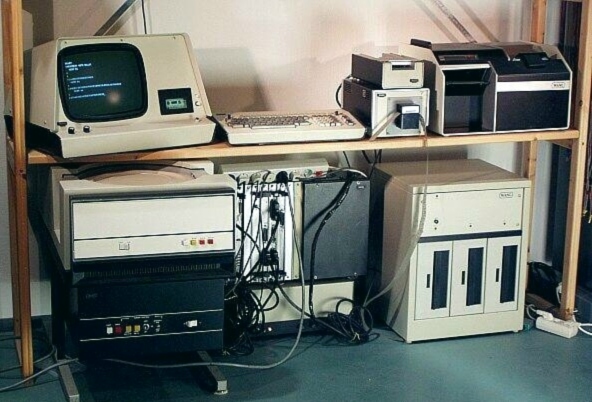
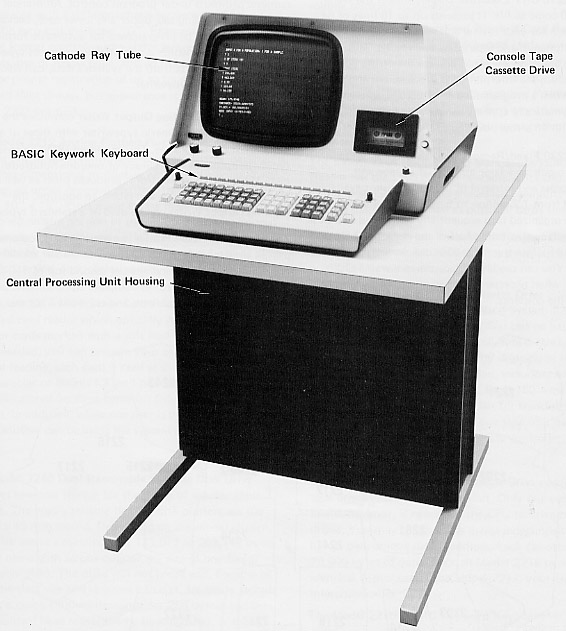
Wang 2200

Ordinador Wang 2200

Vaig instal·lar deu o dotze pels 70's, però no m'en recordo gaire, tan sols d'un, a l'empresa YAMOSA (Yates y Motores, S.A. al port de Barcelona, que ja no trobo activa per Internet) pel tema de recanvis i reparacions a vaixells petits, recordo el el sistema de emmagatzemament extern era una cinta de cassette, molt habitual, llavors, als ordinadors més petits.

Wang 2200 Album per cassettes


Wang 2200
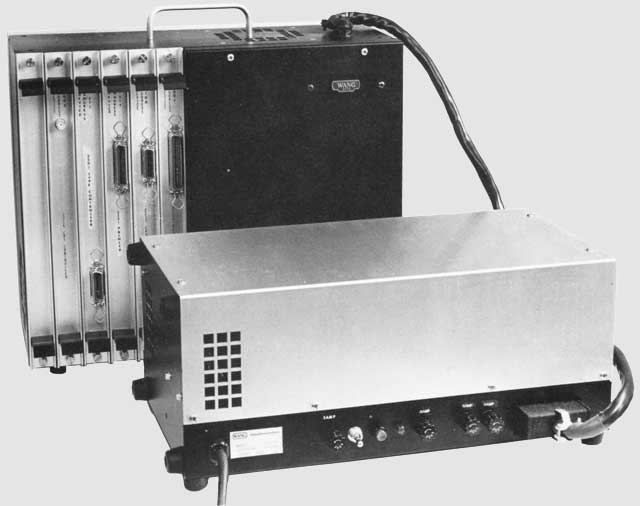
Un dels primers terminals, el 2216
A darrera la CPU, en primer terme la font d'alimentació

Un model molt més sofisticat, d'ús científic, amb tres unitats de diskettes de 8"
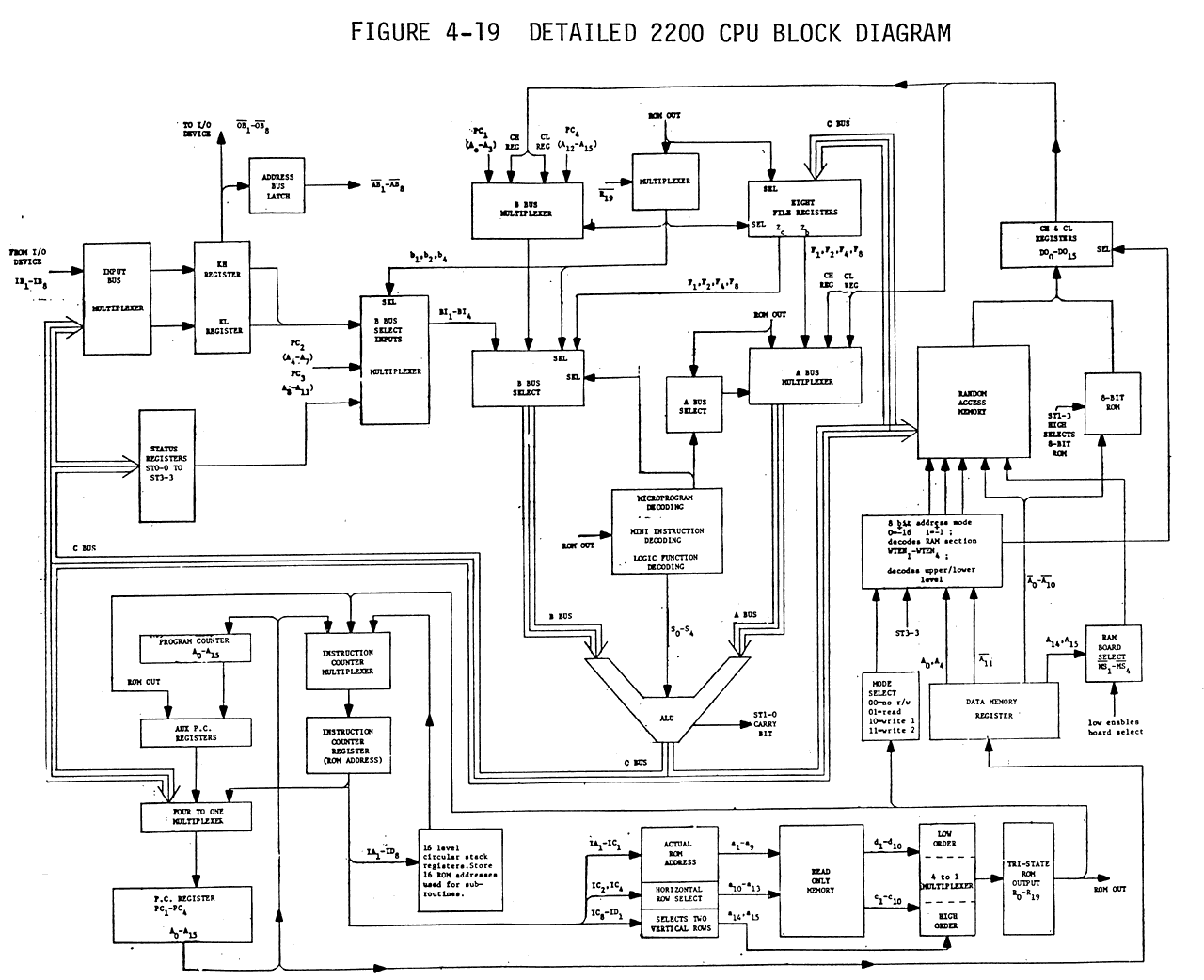
Wang 2200 diagrama de blocs de la CPU
Diagrama de blocs de la CPU
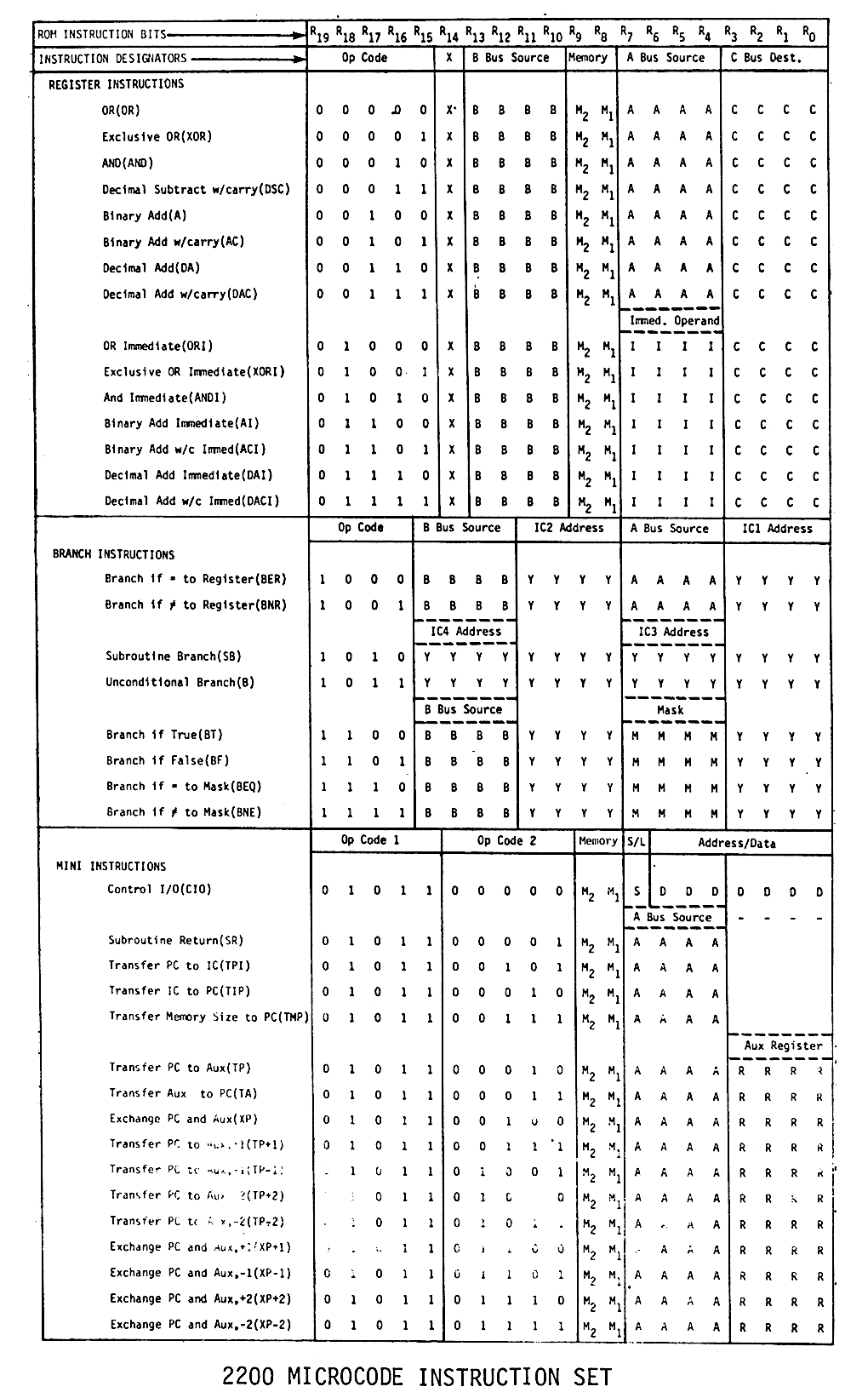
Wang 2200 Joc d'instruccions del microcodi
Joc d'instruccions del microcodi
Wang 2200 esquema del teclat
Esquema del teclat


The Wang 2200 

Born before the era of the microprocessor, the Wang 2200 CPU was built using a couple hundred TTL chips spread over half a dozen boards, and housed in a heavy steel "suitcase." Its BASIC interpreter was written in microcode; there was no machine code that a user could access, unlike microcomputers that would come years later.

The first 2200 shipped in May, 1973. What made it an interesting machine was that it was clearly what one would now call a personal computer. Up until that time, programmers dealt with the large and impersonal mainframe computers, or perhaps programmed on terminals connected to mini-computers via serial lines. At the low end, there were programmable calculators, but these were limited and difficult to program.

The 2200, though, was something else. The machine had a capable BASIC interpreter in ROM, meaning it could be turned on and used within seconds. It was dedicated to the needs of a single person at any one time. The 64x16 CRT display made editing and running programs interactive and immediate, vs. the then-standard method of studying printouts on greenbar paper. The 2200 was also expandable; eventually nearly 100 different peripherals were developed for the system.
In some respects, it was similar to microcomputers that came four or five years later, such as the Commodore Pet or the TRS-80. Of course, the 2200 was much more rugged, reliable, and expandable than such machines.

Over the years, the 2200 evolved to have an ever-more powerful BASIC dialect, to accommodate multiple users simultaneously. New models were produced for nearly 20 years before Wang ended development.


Very Brief History of the 2200 


Wang Laboratories was founded in 1951 by Dr. An Wang, an immigrant from China. Wang had gotten Masters and Ph.D. degrees at Harvard, where he also made some key inventions in the development of core memory technology.

By the mid 1960's, Wang Labs had already made a name for itself in building a series of increasingly sophisticated electronic calculators, such as LOCI, the Wang 300 family, the Wang 700 family, and many derivative products.

Seeing the writing on the wall that calculators were getting cheaper and developments in LSI technology would soon make them a commodity item, Wang decided to develop a general purpose computer. After a couple failures, finally Wang found success with the Wang 2200 computer. Within three years, Wang had sold more than 10,000 of the machines.

Although Wang came out with the IBM 360-like Wang VS family, the 2200 served the low end well for years more. Ultimately there were three generations of 2200 CPUs, two major versions of Wang BASIC, many supported peripheral devices, and countless system combinations supported.

During the 1980's, the 2200 family was squeezed from above and below. Below, the IBM PC was taking away entry level users. The 2200 family couldn't move up, as that poached on Wang VS territory. A third generation BASIC and, for the first time, COBOL was developed for the 2200, but shortly before introduction to the market, these efforts were quashed by company management.

Wang Labs started suffering, in part, due to poor leadership during the 80s. At the end of 1986, Dr. Wang retired and left his son, Fred, as President and CEO of Wang Labs. Things went badly, and by mid-1989, Dr. Wang fired his son. It was too late, though, as Wang Labs was already in a death spiral. A new president, Richard Miller, arrived and cleaned house, selling off many non-critical assets and shedding more than ten thousand employees.

All this was necessary, but despite those painful measures, Wang entered bankruptcy in 1992. All sales and marketing of the 2200 family ended immediately, although support continued on. Wang attempted a new direction in selling imaging systems, which was partially successful. InterACTION 97, in Boston, was the last Wang conference ever held, and at that time, there were more than two hundred Wang 2200 systems still under maintenance.

Finally, in 1999, Wang was acquired by Getronics.

In 2006 there are still customers in the field using their 2200 systems for production work, although their numbers continue to dwindle.


Manuals

Emulador


Altres ordinadors amb els que he treballat:
diumenge, 14 de desembre del 2014

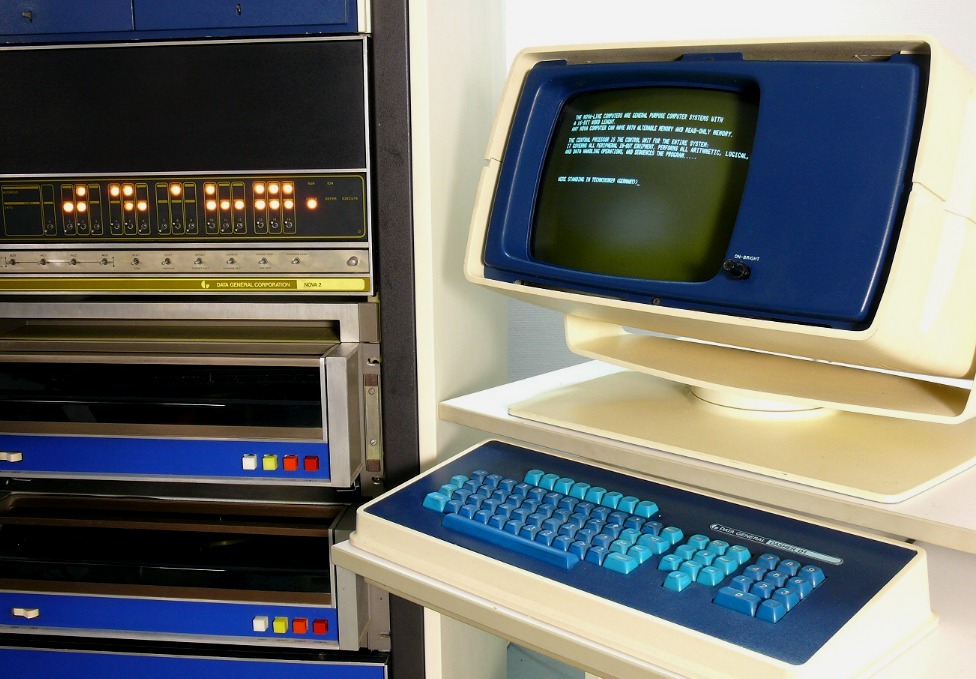
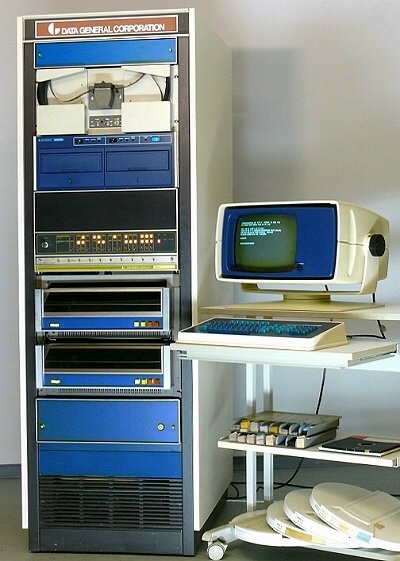
Data General: NOVA 2

Data General: NOVA 2

Amb uns semblants a aquests recordo haver fet la primera mecanització del Institut Municipal d'Higiene de Barcelona (el pla de vacunacions infantils i els historials mèdics de les revisions escolars), el Hospital del Mar (historials clínics i administració) i la Cooperativa Ferreteros Asociados Catalanes (FAC).

Data General: NOVA 2


Edson de Castro was responsible for product management at DEC and was intent on developing a 16-bit computer with a processor that would fit on a single printed circuit board. But Ken Olson, the founder of DEC, wasn't supportive. So de Castro left DEC in 1968 together with three other hardware engineers to found his own company in a vacant barber's shop: Data General Corporation (Massachusetts, USA).
Already in 1969 the first 16-bit computer in the "NOVA"series was ready for the market. Thanks to the simpler production method (no wire wrapping, only two boards + memory boards etc.) the basic version was quite inexpensive at $4000. However, this basic model alone wasn't really that useful, and after extending the computer the total price was substantially higher. The Nova computer was advertised as "the best small computer in the world". At this time, DEC was still building the PDP-8/I and the PDP-12, which required lots of very small flip-chip-modules.
The successor model (available in 1973), the NOVA 2, was simplified even further, and the increased chip density made it possible to have the whole processor together with the control logic for slow peripheral devices (teletype, paper tape puncher and reader) one single board. Our Nova is a NOVA 2/10 model with slots for 10 boards, and therefore enough space for quite a few device controllers and memory extensions.
From today's perspective, the rather huge boards (15x15 inch, nicknamed "circuit graveyards in baking tray size") do have disadvantages: any kind of repair is very difficult, because it is not possible to pin down a malfunction by exchanging small boards.
The NOVA shown in the picture is from a university. It is equipped with two harddisk drives, one twin floppy drive (8" disks!), one teletype, one high-speed paper tape punch reader and one punch card reader (not in the picture). Later on a terminal was added, which extended the computer to a comfortably usable system.

Hardware configuration, from top to bottom:
Paper tape punch reader (mostly used for testing programs included with every delivered system)
Twin disk drive for 8-inch floppy disks, Model 6032
CPU with core memory, 32 KB, access time 0.8 us
Two hard-disk drives with removable cartridges, Series 30. Capacity 1.200.000 16-bit words, or 2.4 MB.
Disk Cartridge System 4047, necessary to connect the second disk
Terminal "DASHER 1", Model 6052 by Data General, on the right hand side
Data General: NOVA 2. Mòdul de memòria principal de 8 Kb.
Mòdul de memòria principal, 8 Kb.

Manuals


Wikipedia


Altres ordinadors amb els que he treballat:

dijous, 24 de juliol del 2014

IBM 5100 / IBM 5110


Folleto comercial
Publicidad IBM 5100


Altres entrades relacionades:

divendres, 26 de juliol del 2013

Data General Eclipse

Eclipse (Data General)
Eclipse S/230, Data General
No recordo a on vaig instal·lar Eclipses, el que si recordo és que van ser 5, i ho recordo per que al comprar 5 a Data General et donaven un status especial, i aquest si que el vaig assolir. Va ser per mitjans i finals dels 70. Eclipse (Data General) - CPU board (front)
Eclipse (Data General) - CPU board (rear)
The FHP used PAL’s and multi-layered boards. It took five 15x18 inch printed circuit boards to hold all of the logic for the CPU - two boards to do the instruction fetching and three boards to do the instruction execution. These boards were named FA (for Fetch “A” board), FB, EA, EB, and EC. (15x18 inch boards were non-standard for DG at the time.)
Eclipse (Data General)


Altres ordinadors amb els que he treballat:
dissabte, 20 de juliol del 2013

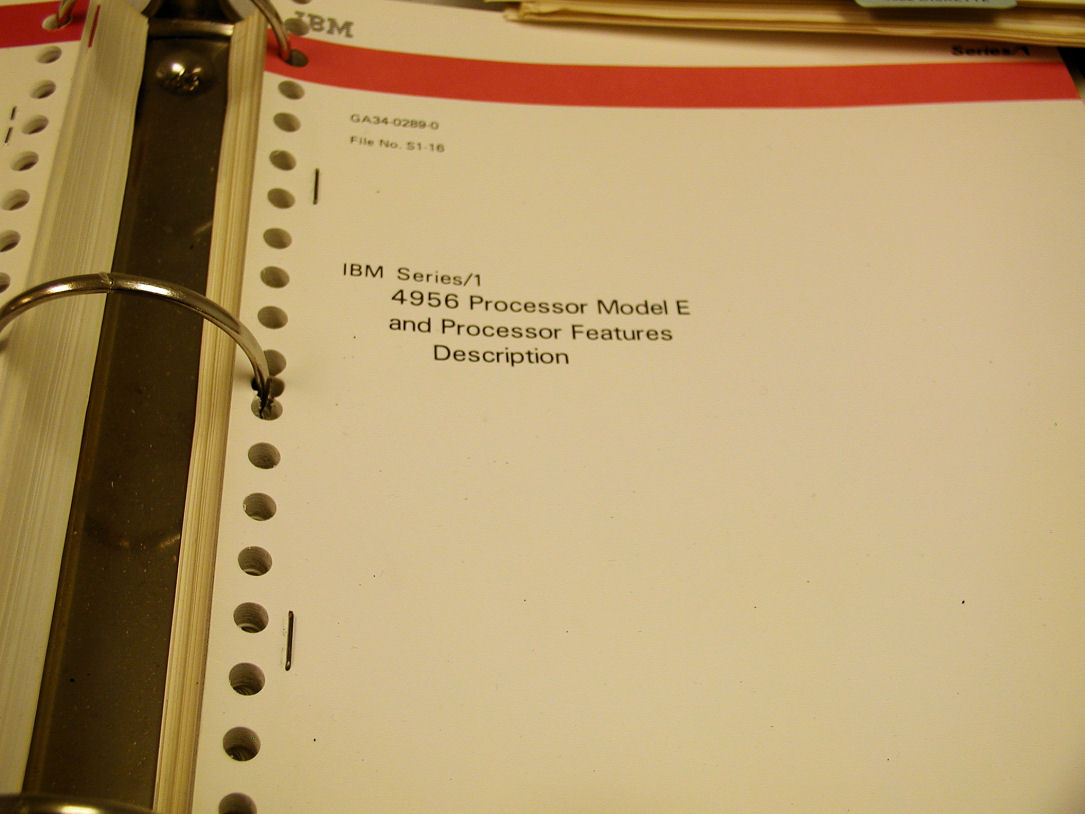
IBM Series/1


Per causa d'una instal·lació d'un d'aquests equips es van donar les circumstàncies per traslladar-me a viure a Tarragona l'any 1980.

IBM Series/1 Model 3 (IBM 4953)

IBM Series/1


Announced by IBM's General Systems Division (GSD) on November 16, 1976, the IBM Series/1 was a small, general purpose computing system offering both communications and sensor-based capabilities. It also allowed users to attach a large number and variety of input and output devices, including custom-built devices for special application requirements.

Initially provided in two versions -- the Model 3 (IBM 4953) and the Model 5 (IBM 4955) -- the Series/1 was offered on a purchase-only basis at prices ranging from $10,000 to $100,000 depending upon configuration. The 19-inch, rack-mountable units were available in 16K increments of memory from 16,384 to 65,536 bytes in the Model 3 and from 16,384 to 131,072 bytes in the Model 5. The Model 3 had a storage cycle time of 800 nanoseconds (billionths of a second) and the Model 5, of 660 nanoseconds.

Also available at announcement were such devices as the IBM 4962 disk storage unit containing 9.3 million bytes of storage space, IBM 4964 diskette unit, IBM 4974 serial printer, IBM 4979 display station, IBM 4982 sensor input/output unit, IBM 4959 input/out expansion units, IBM 4999 battery backup unit, user attachment features and three communications features.

The Series/1 was developed and manufactured at GSD's facility in Boca Raton, Fla. The first Series/1 machines were delivered to Citibank N.A. in New York City and to Quaker City Motor Parts in Middletown, Del. under a test marketing program begun in April 1976.

IBM offered several follow-on Series/1 processors (e.g., the IBM 4954 and IBM 4956) in the late-1970s and early-1980s, but all models were withdrawn from marketing in the mid- and late-1980s. (VV4024)
[From IBM]


This is the CPU card, with 2MB of RAM and an FPU. The blue connector on the bottom left is to connect to the IPL and programmers consoles, the connectors on the edge next to the blue on is for connectors that attach memory cards.

[From J.Rollins]


Altres entrades relacionades:

diumenge, 7 de juliol del 2013

IBM A-101

Ordinador IBM A-101
Cinc d'aquests ordinadors formaven la plataforma hardware de la primera generació dels Space Shuttle
Vaig participar en una petita part del software d'aquell programa, podeu veure l'història complerta a: Mis especiales aventuras espaciales


Altres ordinadors amb els que he treballat:
dissabte, 27 d’agost del 2011

Interdata 7/32 8/32


Interdata 7/32

En los 70’s instalé 4 de estos monstruitos del grupo Perkin-Elmer, los primeros que vi con procesadores de 32 bits, de hecho fueron los primeros que se instalaron en España, de mi escasa memoria he extraído los siguientes detalles:
  • Con el teclado hexadecimal que se puede ver es el frontal superior (los otros dos frontales son discos) podíamos hacer un ‘debug’ por ‘hardware’ del ‘software’ tanto de base como aplicativo decirle al procesador a partir de qué posición de memoria tenía que empezar a ejecutar, y otras cosillas a bajo nivel… cosa que ahora suena a chino.
  • La consola de operación era el teletipo que se puede ver en la parte inferior izquierda con papel continuo, era nuestra “pantalla” y los programas, o los escribíamos directamente por ahí o los cargábamos con las modernidades de la época, mediante cinta de papel perforada, infinitamente más cómodo que las tarjetas perforadas. En esas fechas las pantallas no se usaban para interaccionar con el sistema operativo, tan sólo con los aplicativos.
  • No recuerdo el modelo exacto con que trabajé (7/23 o 8/32) o si fueron ambos, tampoco la cantidad de memoria que tenia. Lo que si recuerdo es que la memoria base era caché (en el sentido original de la palabra: memoria permanente con núcleos de ferrita).
  • Que los sistemas operativos no eran tan completos como ahora, recuerdo que en este tuve que programar un ‘addon’ para dotarle de memoria virtual, otro fue el ‘driver’ para una impresora y otro para que funcionara por la noche en modalidad ‘ahorro de energía’…
Sólo recuerdo una instalación, la de una ferretería en Sant Andreu (Barcelona), de la que mantengo un grato recuerdo, puesto al día inesperadamente por un buen amigo, Andreu Veà , que comentando el hecho el 10 de diciembre de 2010 me envió estas fotos, la ferretería estaba casi delante de casa de sus abuelos:


En la Wikipedia:


Se puede leer sobre la importancia de esta serie en este artículo del la webacademia (a pesar de la traducción)


El modelo 7/32 y modelo 8/32 eran minicomputadoras de 32 bits desarrollado por Interdata, Inc. de Oceanport, Nueva Jersey durante la década de 1970. Ellos son recordados principalmente por ser los primeros miniordenadores de 32 bits. El 8/32 era una máquina más potente que el 7/32, con la característica notable de permitir microcódigo programable por el usuario para ser empleado.
Tras el éxito comercial de la microcodificado, mainframes IBM 360 de la serie de los ordenadores, las compañías de lanzamiento llegaron al lugar para escalar la tecnología de microcódigo para los más pequeños miniordenadores. Entre estas empresas se Prime Computer, Microdatos y Interdata. Interdata microcódigo usado para definir una arquitectura que fue fuertemente influenciado por, pero de ninguna manera clonados, el conjunto de instrucciones IBM 360. El sistema operativo de tipo DOS en tiempo real serial/multitarea se llamaba OS/32.
El 7/32 y 8/32 se convirtieron en los ordenadores de la elección de los sistemas integrados de gran escala, como las máquinas utilizadas en el análisis FFT en tiempo real sísmica, escáneres CAT, y los sistemas del simulador de vuelo. También se utilizan a menudo como periféricos no sea de IBM en las redes de IBM, que sirve el papel de las estaciones de trabajo y sistemas de gestión de colas HASP, llamados estaciones RJE. Por ejemplo, los equipos detrás del primer simulador de transbordador espacial consistió en treinta y seis inputing minis 32 bits y/o enviar datos a ordenadores centrales conectados en red, todo en tiempo real. El 8/32 también fue empleado por aplicaciones matemáticas Group, Inc. para producir la gran mayoría de las imágenes generadas por ordenador en 3D de la película de 1982 Tron. Mientras CGI había sido utilizado durante la década de 1970 para los segmentos de menores del trabajo de la película, Tron fue la primera película de un gran productor que hizo un amplio uso de CGI.
El éxito de la Interdata minis 32 bits en estos mercados hizo que la empresa atractiva para Perkin-Elmer Corporation, una grande, Norwalk, instrumentos científicos basados en Connecticut y el fabricante de la óptica con una gran presencia en la defensa y aeroespacial. Perkin-Elmer fue también un competidor principal de Varian, una empresa comercial de sus propios sistemas informáticos. Interdata fue adquirida por Perkin-Elmer en 1973, y trajo bajo el nombre de la empresa en 1976 como la división de sistemas de ordenador, una de las varias divisiones en recién formado Grupo de Sistemas de Datos de PE. En 1985, el DSG se rompió a pedazos y la CDS fue vendido a Concurrent Computer Corporation, que todavía producen un 3200-series vasto aumento de las máquinas.
En 1976, las computadoras Interdata estaban siendo utilizados por el Grupo de Arquitectura de la máquina y el Fondo Común de la Computación en el MIT, usando FORTRAN y PL/1, pero no Unix. Algunos todavía están en uso hoy en día. Interdata también produjo una serie de equipos basados en 16 bits, como el Modelo 3 Modelo 4 Modelo 70 y Modelo 7/16.
El sistema operativo estándar para el 7/32 y 8/32 fue Interdata de OS/32. Unix fue portado a la plataforma en 1977 por dos grupos, que trabajan de forma independiente, para el 7/32 en la Universidad de Wollongong, y para el 8/32 en los Bell Labs, por lo que las máquinas Interdata 32 bits de los primeros ordenadores no PDP para ejecutar Unix .
SIMH, el proyecto histórico simulador de computadora, incluye simuladores, tanto para el Interdata 32 bits y sus 16 minicomputadoras bits.


Hardware:


Esta era la segunda de las dos placas que constituían el procesador, como se puede ver todavía no habían microprocesadores de 32 bits, si señores, dos grandes placas hacían lo que ahora hace un sólo chip.
Interdata 7/32 CPU-B Board

Manuales


Simulador


Como hoy en día hay de todo, hasta he descubierto un simulador del Interdata 32 bits.


Altres entrades relacionades:

dissabte, 23 de juliol del 2011

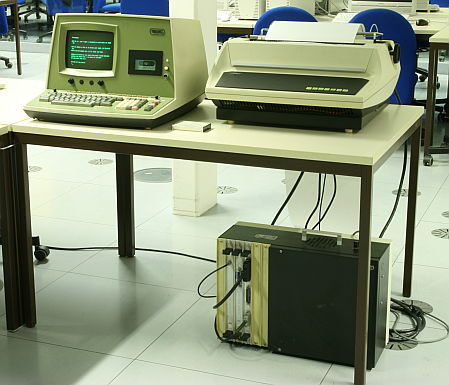
Cogar C4 / Friden Singer 1500 series / ICL 1500 series


Singer 1500 series

Originalmente creado por George Cogar como Cogar C4, fue adquirido por la Singer Friden Division y luego adquirida por ICL (International Computers Ltd.), que acabaría posteriormente en manos de Fujitsu.

Recuerdo que teníamos 4 Kb. de memoria, y en la versión básica no había disco duro, salvo que colocaras uno externo, como un Diablo con 2,5Mb fijos+2,5Mb. removibles.
Singer 1500 series Tape CartridgeSinger 1500 seriesSinger 1500 series Tape decksSinger 1500 series Tape decks
Se trabajaba con unos cartridges de cinta magnética (así como medio cassette) De la bobina fija salía un latiguillo que se insertaba en un aro de la punta de la cinta en el cartucho, así al bobinar extraía la cinta del cartucho y actuaba como una unidad de cinta completa con dos bobinas.

Lo programábamos en Basic y Assembler, por cierto, nada de hexadecimal, este ordenador trabajaba en octal.

La compañía Singer era un poco como la ACME, fabricaba de todo desde máquinas de coser a coches, pasando, como podéis ver, por los ordenadores.


Manuales:

ICL 1500: Programmers Reference Manual (1978) 
ftp%3A%2F%2Fftp.informatik.uni-stuttgart.de%2Fpub%2Fcm%2Fcogar%2FICL1500_ProgrammersReferenceManual_1978.pdf 

Singer 1500: Intelligent Terminal Service Manual 
ftp%3A%2F%2Fftp.informatik.uni-stuttgart.de%2Fpub%2Fcm%2Fcogar%2F23-0563-300_Singer1501_ServiceManual_Dec1976.pdf 

COGAR C4 Schematics 
ftp%3A%2F%2Fftp.informatik.uni-stuttgart.de%2Fpub%2Fcm%2Fcogar%2FCogar_C4_schematics.pdf 

Singer 1501 Service Letter(1973) 
ftp%3A%2F%2Fftp.informatik.uni-stuttgart.de%2Fpub%2Fcm%2Fcogar%2FSinger1501_ServiceLetter_1973.pdf 

Singer Model 1501 Processor Service (1975) http%3A%2F%2Fia801604.us.archive.org%2F20%2Fitems%2Fbitsavers_singer1500l1501ProcessorServiceMar75_3648578%2F23-0563-500_Singer_Model_1501_Processor_Service_Mar75.pdf 

SINGER 1500 SERIES: 1500 to 1500 (SQUICK) COMMUNICATIONS GENERATOR http%3A%2F%2Fbitsavers.informatik.uni-stuttgart.de%2Fpdf%2Fsinger%2F1500%2F91019-00_1500_to_1500_SQUIC_Communications_Generator_1976.pdf


Versión actualizada de lo publicado en Google+ el 23/7/2011


Altres entrades relacionades: